Last updated October 15, 2026







Free written scope consultation - allowances, timeline, and change-order rules on paper before a single trade is scheduled
Construction Permits, Codes & Inspections in CA: What You Need to Know
A Sacramento homeowner paid $28,000 for a permitted bathroom addition. At resale, the buyer’s inspector found the contractor had pulled the permit but never scheduled the final inspection. The county red-flagged the work. The sale fell through. Fixing it cost another $4,200. All because “permit pulled” and “permit closed” are not the same thing. This guide-along with our more guides & resources-explains what California permits actually protect, which Sacramento remodeling projects need them, how Title 24 energy codes affect your project, and what happens to your insurance if unpermitted work fails.
Quick Answer
In California, any remodeling project that alters structure, electrical, plumbing, or mechanical systems generally requires a permit from your local building department. In Sacramento, that means the City of Sacramento Building Division or Sacramento County, depending on your address. A permit is a legal record that work was reviewed, performed, and inspected against current code. It protects you when you sell the house, file an insurance claim, or need to prove the work was done right.
Styles & brands we work with

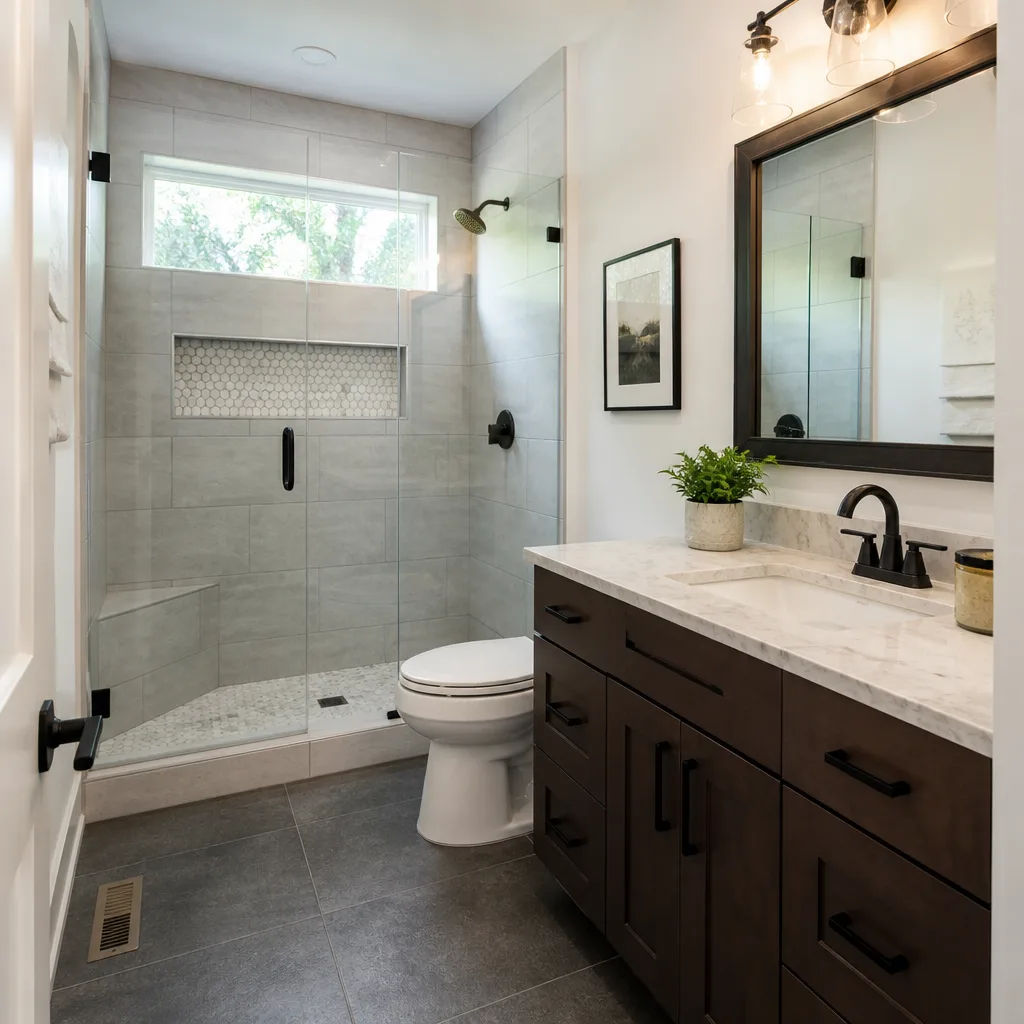



Table of Contents
- Why Permits Matter: The Financial Protection Most Homeowners Miss
- Pulled vs. Finaled: The Difference That Kills Sales
- Which Sacramento Remodeling Projects Need Permits
- Title 24: What California’s Energy Code Does to Your Remodel
- Unpermitted Work and Your Homeowner’s Insurance
- Who Pulls the Permit: Your Contractor’s Legal Obligation
- The Inspection Process: What Actually Happens
- Common Mistakes to Avoid
Why Permits Matter: The Financial Protection Most Homeowners Miss
Permits are not bureaucracy for its own sake. They are the only legal record that the work inside your walls, under your floor, or behind your panel was reviewed and inspected. When you sell your home, the buyer’s title company will search for open permits. When you file an insurance claim, the adjuster will check whether the failed component was permitted. When a neighbor reports an addition that looks too close to the property line, the city will pull your address history and ask questions.
In Sacramento, we’ve seen this play out across neighborhoods from Land Park to Natomas. A kitchen remodel that moved the sink to a new wall without a plumbing permit. A garage conversion with no electrical inspection. A deck built over a gas line with no gas inspection. None of these caused problems the year they were built. All of them caused problems at resale or during an insurance claim, years later.
The permit is the receipt. The inspection record is the warranty. Without both, you own the risk.
What a Permit Actually Does
- Creates a public record that the work meets the building code in effect when it was done
- Triggers inspections at specific stages so problems are caught before drywall covers them
- Protects your resale value when a buyer asks for proof of permitted work
- Shields you from liability if a future owner is injured by defective work
- Keeps your insurance policy enforceable when a covered event damages the remodeled area
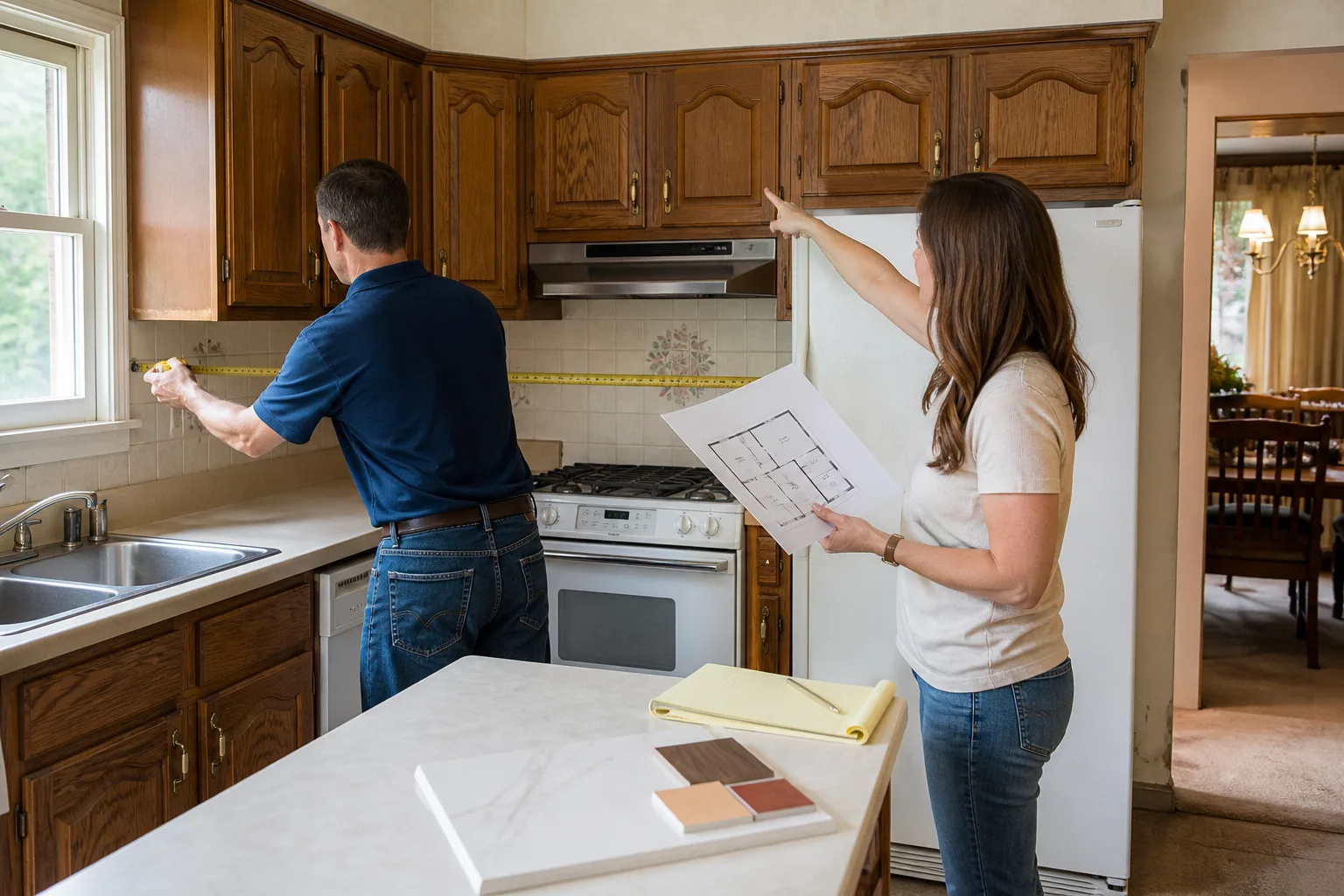
When we run kitchen and kitchen remodeling in Sacramento, the permit file protects our client from the day the project passes final inspection until the day they sell. It is not a cost. It is the only enforceable proof that the work was done correctly.
Pulled vs. Finaled: The Difference That Kills Sales
A permit is “pulled” when the building department accepts the application, collects the fee, and issues a permit number. Nothing has been inspected yet. A permit is “finaled” when every required inspection has been scheduled, performed, and passed, and the building official closes the record.
Thousands of Sacramento homes have pulled permits with open records. A contractor pulls the permit, completes the work, and never calls for the final inspection. The homeowner never knows because the work looks finished. Then the house goes on the market and a title search shows an open permit from 2019. The buyer pauses. The lender pauses. The seller has to track down a contractor who may be out of business, hire a new contractor to reopen the permit, schedule the inspection, and fix whatever the inspector flags, years after the fact.
How to Verify Final Inspection Status in Sacramento
- Go to the City of Sacramento Building Division permit portal or Sacramento County’s online permit lookup, depending on your jurisdiction
- Enter your street address or the permit number if you have it
- Open the permit record and look for the status field
- If the status says “issued” or “open,” the permit has not been finaled
- If it says “finaled” or “complete” with a final inspection date, the record is closed
- If you cannot find your record, call the building division directly and ask for a records search by address
If you’re buying a home with an open permit, the open record becomes your problem at closing. Most lenders will not fund a loan with unresolved open permits on title. The seller may need to complete the inspection process or reduce the price to compensate.
In our experience, this is one of the most common and most preventable problems in Sacramento remodeling. Every project we run ends with a final inspection that the client can see in the public record. The permit number goes in the project file. The finaled status is part of the handoff. Nothing gets called done until the county calls it done.
Which Sacramento Remodeling Projects Need Permits
The California Building Standards Code, adopted with local amendments by the City of Sacramento and Sacramento County, is clear: any construction that alters structure, electrical, plumbing, or mechanical systems requires a permit. Cosmetic work in place, like painting, flooring, and countertop replacement, generally does not.
Here is where Sacramento homeowners consistently get confused.
Definitely Requires a Permit in Sacramento
- Electrical panel upgrades. Upgrading from 100-amp to 200-amp service is structural electrical work and requires a permit plus a utility disconnect inspection.
- Load-bearing wall removal. Any wall that supports ceiling joists, roof framing, or floor above requires an engineered plan, a structural permit, and an inspection before the beam gets covered.
- Window replacement that changes opening size. A same-size window swap is usually exempt. Changing a window to a door, widening an opening, or adding a new window requires a permit and structural header review.
- Full kitchen or bathroom remodel that moves plumbing. Moving a sink, toilet, shower drain, or gas line beyond the existing rough-in triggers a plumbing permit and inspection.
- ADU construction. Accessory dwelling units are heavily regulated in Sacramento. Every ADU, detached or garage conversion, requires full permitting, Title 24 compliance, and separate utility review.
- HVAC system replacement. In California, HVAC changeouts require a permit and a HERS (Home Energy Rating System) test to verify duct leakage and refrigerant charge.
- Water heater replacement. Since 2015, California requires a permit for water heater replacements installed in garages, or any location where bracing and strapping are required.
Commonly Misunderstood as Exempt (They Are Not)
- Bathroom remodels that keep the same footprint. People assume “same layout, no permit.” If you’re replacing the shower valve, moving the drain, or rewiring the vanity circuit, the scope crosses into permit territory.
- Kitchen cabinet replacement. Cabinets alone are often exempt if you’re not moving plumbing. But the moment you change the sink location, add a pot filler, or move the range, the plumbing and gas permits apply.
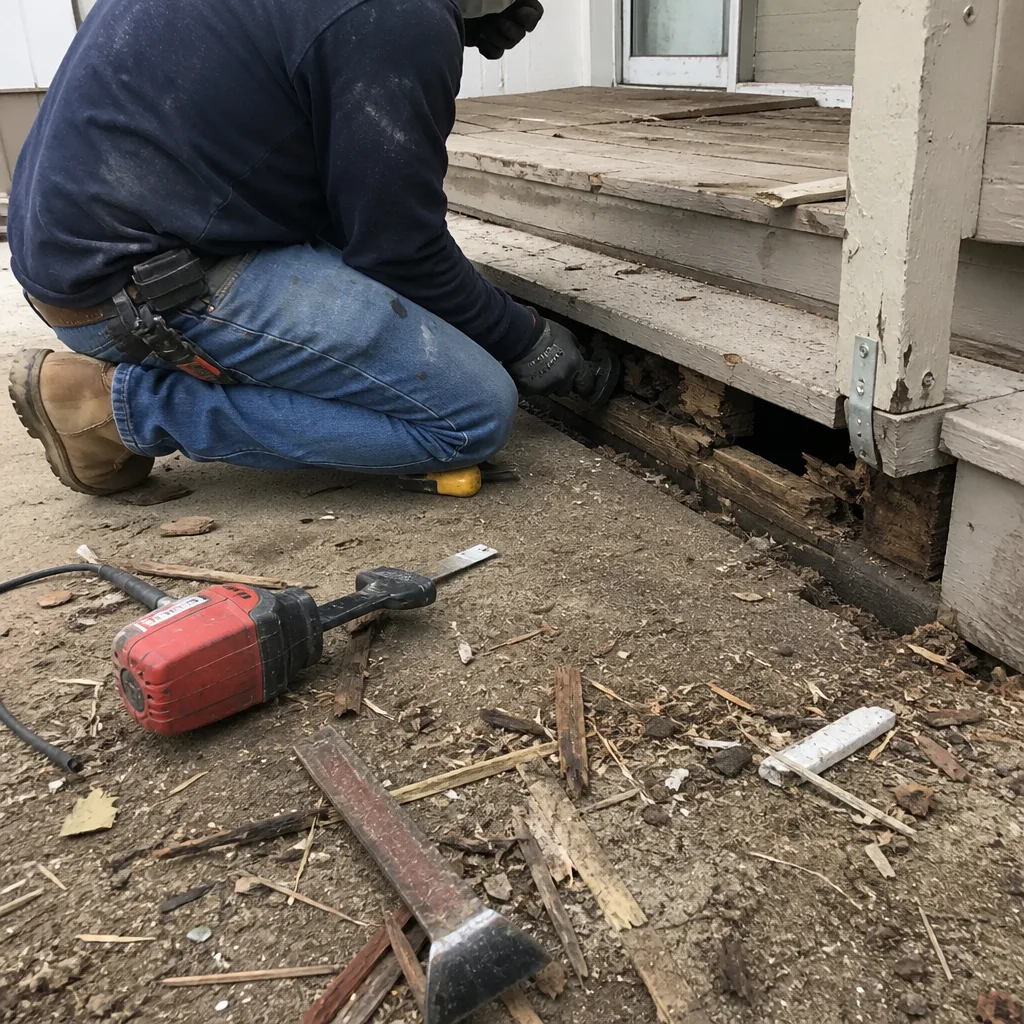
- Deck repairs. Replacing deck boards is exempt. Replacing joists, beams, posts, or changing the deck height is not. Decks over 30 inches off the ground also have specific guardrail and footing requirements.
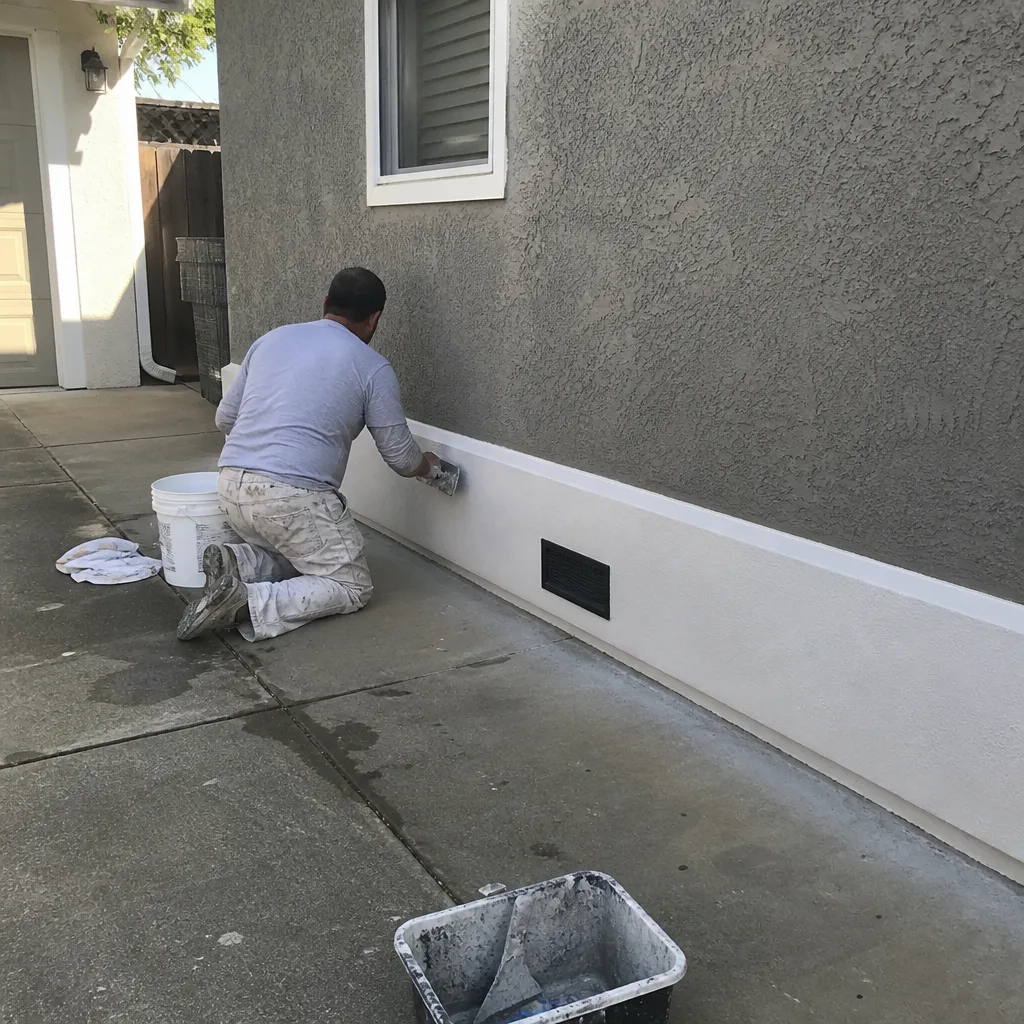
- Stucco siding repair. Small patches are exempt. Removing and replacing entire wall sections involves the building envelope, flashing, and water-resistive barrier, all of which trigger a permit.
When you work with a general contractor in Sacramento, the contractor should determine which permits apply and pull them. If you’re doing the work yourself or acting as the owner-builder, the building department can walk you through the specific requirements for your scope. The rule of thumb: if it involves structure, electrical, plumbing, or gas, ask first.
Title 24: What California’s Energy Code Does to Your Remodel
California’s Title 24, Part 6 is the state energy code. It applies to most permitted work that touches the building envelope, lighting, HVAC, or water heating. What Title 24 actually requires depends on the scope, but most Sacramento homeowners are surprised by at least one requirement at inspection time.
The most common Title 24 surprises in our market:
- Window replacements must meet U-factor and SHGC (Solar Heat Gain Coefficient) limits. You cannot install any window you like. The window must be dual-pane, low-e, and rated for Sacramento’s climate zone (16 for the city, 11 for parts of the county’s higher elevations).
- HVAC changeouts trigger duct leakage testing. California requires a HERS rater to test and certify the duct system. If the ducts leak above a threshold, the contractor has to seal them and retest before final inspection.
- Bathroom remodels with new exhaust fans require specific fan efficacy. The fan must meet minimum CFM per watt, and for larger projects, the building may trigger a whole-house ventilation calculation.
- Kitchen remodels with new lighting require dimmers or occupancy sensors. Title 24 requires all new lighting in a permitted kitchen remodel to use high-efficacy fixtures, and most require dimming controls.
- Adding square footage triggers a whole-house energy reality check. In some cases, adding onto a home triggers a requirement that the existing home’s attic insulation or duct insulation be brought up, not just the new part.
For a bathroom remodeling project in Sacramento, Title 24 means the exhaust fan spec matters, the lighting plan is checked at inspection, and the water heater, if replaced, must meet the state’s efficiency standard. None of this is optional, and none of it is the homeowner’s job to figure out. It is the contractor’s job to know what Title 24 requires for the scope and to build it into the written price before work begins.
The big takeaway: in California, you cannot avoid the energy code by doing a smaller remodel. If the work is permitted, Title 24 applies to the parts being touched. A written estimate that does not account for Title 24 compliance is a written estimate that will change later.
Unpermitted Work and Your Homeowner’s Insurance
Here is what actually happens in California when an insurance claim is tied to unpermitted work.
Your homeowner’s policy covers sudden and accidental damage to your property, subject to the policy terms. If that damage originates in an unpermitted modification, the adjuster has a basis to deny the claim or reduce the payout. The carrier’s argument is that the work was not inspected, did not meet code, and represents a maintenance failure or a known risk the homeowner took on.
Examples we’ve seen in Sacramento:
- A water heater replaced without a permit leaks through the second floor. The insurance company denies the full claim, arguing the unpermitted installation failed at a soldered joint that would have been inspected under a permit.
- An unpermitted electrical panel sub-panel added to power a room addition but no permit was pulled. A short causes an attic fire. The adjuster traces the origin to the unpermitted circuit and limits the payout.
- An unpermitted bathroom remodel fails at the shower pan, flooding the downstairs. The claim is approved for the sudden water damage but the cost to repair the shower itself is excluded because the shower was never approved.
Not every unpermitted modification voids a claim. Policies vary by carrier. The key variable is whether the unpermitted work caused the covered event. If a tree falls on your unpermitted sunroom, the tree damage is often covered because the cause was external. If the unpermitted sunroom’s roof fails due to poor construction, the claim can be denied or limited because the cause was the work itself.
The lesson: the permit is your evidence. If your insurance company asks whether the electric panel was permitted, you want the document that says yes.
Who Pulls the Permit: Your Contractor’s Legal Obligation
In California, the contractor is legally required to pull the building permit when the work requires one. Business and Professions Code section 7031 and the Contractors State License Board’s rules are direct about this. The licensed contractor applying for the permit is responsible for scheduling inspections, meeting code, and closing the permit.
A contractor who asks the homeowner to pull the permit as “owner-builder” is usually doing one of three things:
- Avoiding the time and paperwork of the permit process
- Avoiding the legal liability that comes with being the permittee
- The contractor is not properly licensed for the scope of work
Owner-builder permits are legal for homeowners doing their own work. They are not legal as a way for a contractor to avoid responsibility. If a contractor asks you to pull the permit, treat it as a red flag and ask why. If the answer is that it’s “faster” or “cheaper,” remember that the homeowner who pulls the permit becomes legally responsible for the work, the inspections, and any code violations, while the contractor walks away with the check.
We pull permits on every project that requires one. The permit is in our name as the licensed contractor. The inspections are our responsibility. The final sign-off is our responsibility. That’s what a written price and a written guarantee are built on: a contractor who stands in front of the work, not behind the homeowner.
The Inspection Process: What Actually Happens
Understanding the inspection timeline helps you plan your remodel and spot problems early.
A Typical Sacramento Kitchen or Bathroom Remodel Inspection Sequence
- Plan review. The project drawings go to the building department for review before the permit is issued. Structural, electrical, plumbing, and mechanical plans are checked against current code.
- Rough-in inspections. After framing and before drywall, the inspector checks structural members, electrical wiring, plumbing drains and supply lines, and HVAC ducting. This is the most important inspection you’ll probably never see.
- Insulation and lath inspection. Where required, the inspector verifies insulation R-value and, for exterior walls, the paper and lath system before stucco or siding.
- Gypsum board inspection. On larger projects, the inspector may require an inspection after drywall is hung but before tape and texture, to verify fastener spacing and panel type.
- Final inspection. After finishes are installed and the fixture list is complete, the inspector walks the entire project. This is the inspection that closes the permit.
Sacramento’s building division is responsive, but scheduling inspections can take days, not hours. A contractor who plans the inspection sequence into the project schedule avoids the bottleneck where a rough-in inspection is called on a Tuesday, scheduled for Friday, and the drywall crew sits idle for three days.
In our experience, the biggest driver of inspection pass-rates is preparation. The contractor knows what the inspector checks. The contractor stages the work so the inspector can see it. When that happens, inspections pass and the job keeps moving. When a contractor wings the inspection and hopes for the best, that is when a Sacramento remodel stalls out or, worse, the permit stays open for years.
Materials make a difference here too. We source fixtures from brands like Moen, Delta, and Kohler, and countertops from Cambria and Silestone, because they arrive with the spec documentation inspectors ask for. A name-brand fixture with a published flow rate and a known valve spec passes a plumbing inspection faster than an unbranded part with no paperwork. It is one more reason the product choice is not just about looks.
Common Mistakes to Avoid
- Assuming “permit pulled” means “work approved.” The permit is only the permission slip. The final inspection is the approval. If the final inspection never happened, the work is legally incomplete no matter how good it looks.
- Letting a contractor convince you the job “doesn’t really need a permit.” In Sacramento, the scope list is specific. If the work touches structure, electrical, plumbing, or gas, it generally needs a permit. A contractor who waves it off is shifting risk to you.
- Pulling an owner-builder permit when you hired a contractor. You become legally responsible for the work. The contractor gains no legal obligation to you for the permit. This is the fastest way to own someone else’s mistake.
- Ignoring Title 24 until the inspector shows up. The energy code applies at plan review, not at final inspection. Windows, lighting, fans, and insulation that don’t meet Title 24 can fail inspection and trigger change orders.
- Covering rough-in work before the inspection. Drywall over uninspected framing, wiring, or plumbing is a huge mistake. The inspector will require you to open the wall, which costs real money, or the job fails inspection and the permit stays open.
- Selling a Sacramento home with an open permit. Open permits are discoverable in title search. They delay closings, invite renegotiation, and can kill a sale entirely. Before listing, pull your permit history and close anything open.
- Choosing a contractor based on price before verifying they pull permits. A contractor who skips permits can underbid one who doesn’t by the exact cost of the permit and the inspection time. The savings look real on day one. The open permit, the denied insurance claim, or the failed inspection looks real later.
See the difference
 Before
 After
After Before
 After
After Before
 After
AfterWhen to Call a Professional
If you’re planning a kitchen remodel, bathroom remodel, or whole-home remodel in Sacramento, and the scope touches plumbing, electrical, or structure, call a licensed general contractor before you touch a wall. The permit decision happens before the demolition, not after. A licensed contractor will determine the permit requirements, pull the permits in their name, schedule the inspections, and close the record. If you’ve discovered an open permit on a home you own or are buying, get a contractor involved to assess what it takes to finalize it. Penhallow Remodeling Sacramento offers free estimates in Sacramento. Call (279) 300-1177 to talk through your project and get a written price before any work starts.
Frequently Asked Questions
For a typical kitchen or bathroom remodel in Sacramento, permit fees usually run $1,200 to $4,500 depending on the value of the work, the number of inspections, and any plan review requirements. The fee is based on the project valuation you submit and the building department’s fee schedule. For a precise number on your scope, the permit application process will generate a fee once the building department reviews the valuation. For a larger project or an ADU, plan review and utility review fees can push the total higher. Call (279) 300-1177 to discuss your specific project and understand what the permit will cost before you commit.
You can list a house with unpermitted work, but you must disclose it on the California Seller Property Questionnaire, and most buyers will ask for a price reduction or repair. Lenders may refuse to fund a purchase with open permits on record. Unpermitted additions, garage conversions, and room additions in Sacramento are common discovery items during escrow because the county’s online records make them easy to find. Closing the permit before listing is almost always cheaper than negotiating it away in escrow.
The inspector writes a correction notice listing the specific code sections the work does not meet. Your contractor fixes the issues and calls for a reinspection. You pay for the reinspection fee and for the corrections unless your contractor’s agreement covers the corrections. This is where a written guarantee matters. Under our 365-Day Done Right Promise, if work we performed is not done right, we make it right at no charge, including code corrections that come up at inspection.
Replacing cabinets in the same layout without moving plumbing, electrical, or gas usually does not require a permit in Sacramento. The moment you move the sink, relocate the range, add outlets, or change the gas line, you trigger plumbing, electrical, or mechanical permits. A kitchen remodel that keeps everything in place is often cosmetic. A kitchen remodel that changes the layout is nearly always permitted.
For a straightforward kitchen or bathroom remodel, plan review usually takes one to three weeks, and the inspection sequence follows the construction schedule as the work progresses. Larger projects that require structural engineering or ADU review can take longer. A well-prepared contractor submits complete plans the first time, which avoids resubmittal delays. Our Penhallow Remodeling Sacramento home project process includes the permit timeline in the written schedule so you know when inspections will happen.
A building permit verifies that the construction meets building, electrical, plumbing, and mechanical codes. A planning permit, sometimes called a zoning or land-use permit, verifies that the project fits the zoning rules for your lot, including setbacks, height limits, and use. In Sacramento, most interior remodeling projects only require a building permit. Additions, ADUs, and changes to the exterior footprint may require both. Your contractor should know which applies to your project before the estimate is written.
The Bottom Line

Permits in California are the homeowner’s protection, not a bureaucratic hurdle. A finaled permit is the legal record that work was reviewed, inspected, and passed. An open permit is a liability that follows the house through a sale or insurance claim. In Sacramento, the rules are specific about what requires a permit, and Title 24 energy requirements apply to most permitted work in ways that surprise homeowners. The contractor’s legal obligation is to pull the permit, schedule the inspections, and close the record. When you choose a contractor who stands behind a written price and a written guarantee, the permit is part of the promise. Call (279) 300-1177 to schedule your free estimate and get a written number before the first tool comes out.
Written by Trevor Nash, Owner at Penhallow Remodeling Sacramento, serving Sacramento since 2004.