Last updated October 15, 2026







Free written scope consultation - allowances, timeline, and change-order rules on paper before a single trade is scheduled
DIY vs Professional Construction: The Sacramento Homeowner’s Decision Guide
In California, a homeowner can legally pull a permit and act as their own general contractor on most residential work. Sounds like a money-saver, and on paper it is. But here’s the part nobody tells you at the lumber counter: the moment you sell that Sacramento house, you become the contractor of record for every bit of DIY work you did. Under California law, you’re on the hook for construction defects for up to ten years, whether you knew about them or not. This guide walks through the real decision matrix, the permits, the insurance gaps, and the resale liabilities, so you can decide with your eyes open instead of after the drywall is up. For more guides & resources, explore our blog.
Quick Answer
DIY makes sense for cosmetic, non-permitted work in Sacramento, paint, trim, flooring, basic fixture swaps, where your downside is a do-over, not a denied claim or a resale disclosure nightmare. Hire a licensed professional for anything involving structural changes, plumbing, electrical, gas lines, or work that requires a permit. A contractor’s written guarantee and license transfer the liability for defects away from you, which is worth more than the labor savings on any job over about $5,000. See our How to Hire a Construction Contractor in Sacramento: A Step-by-Step Guide for vetting professionals.
Styles & brands we work with

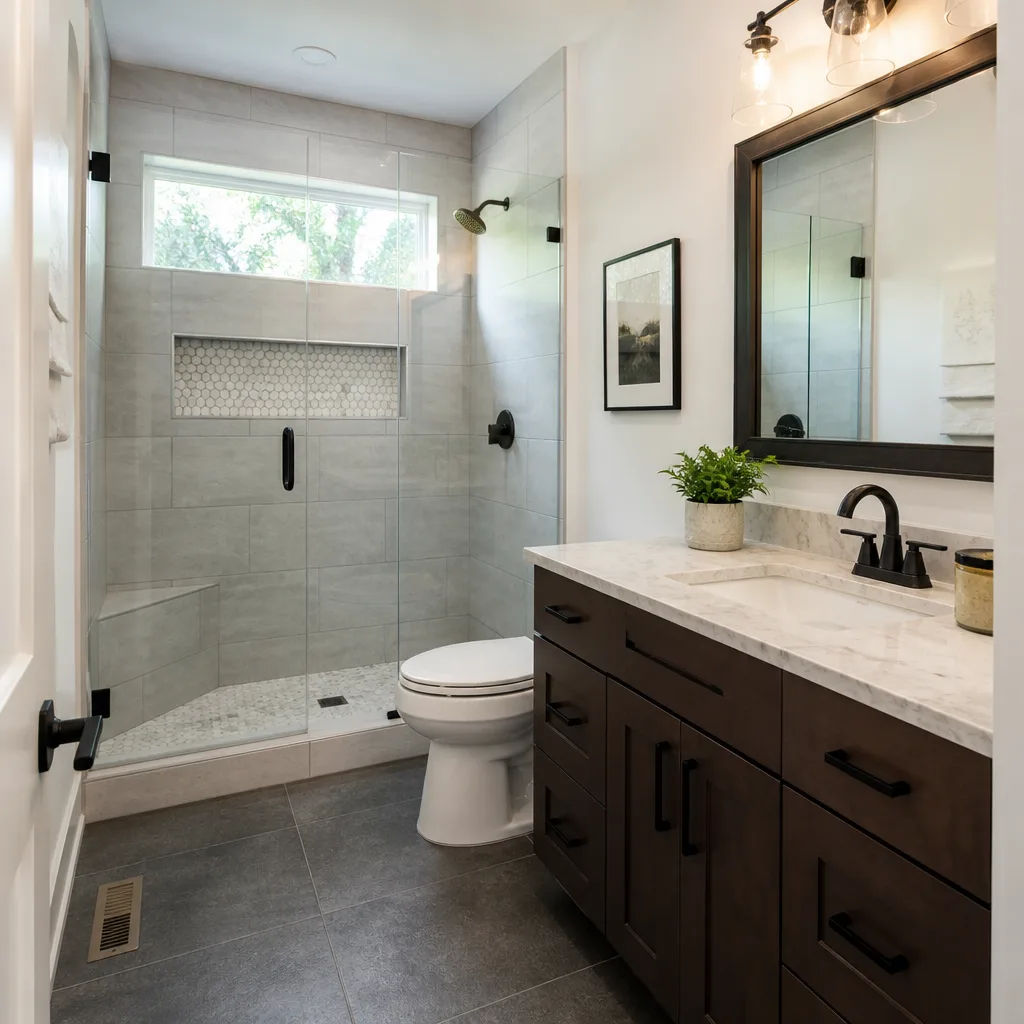


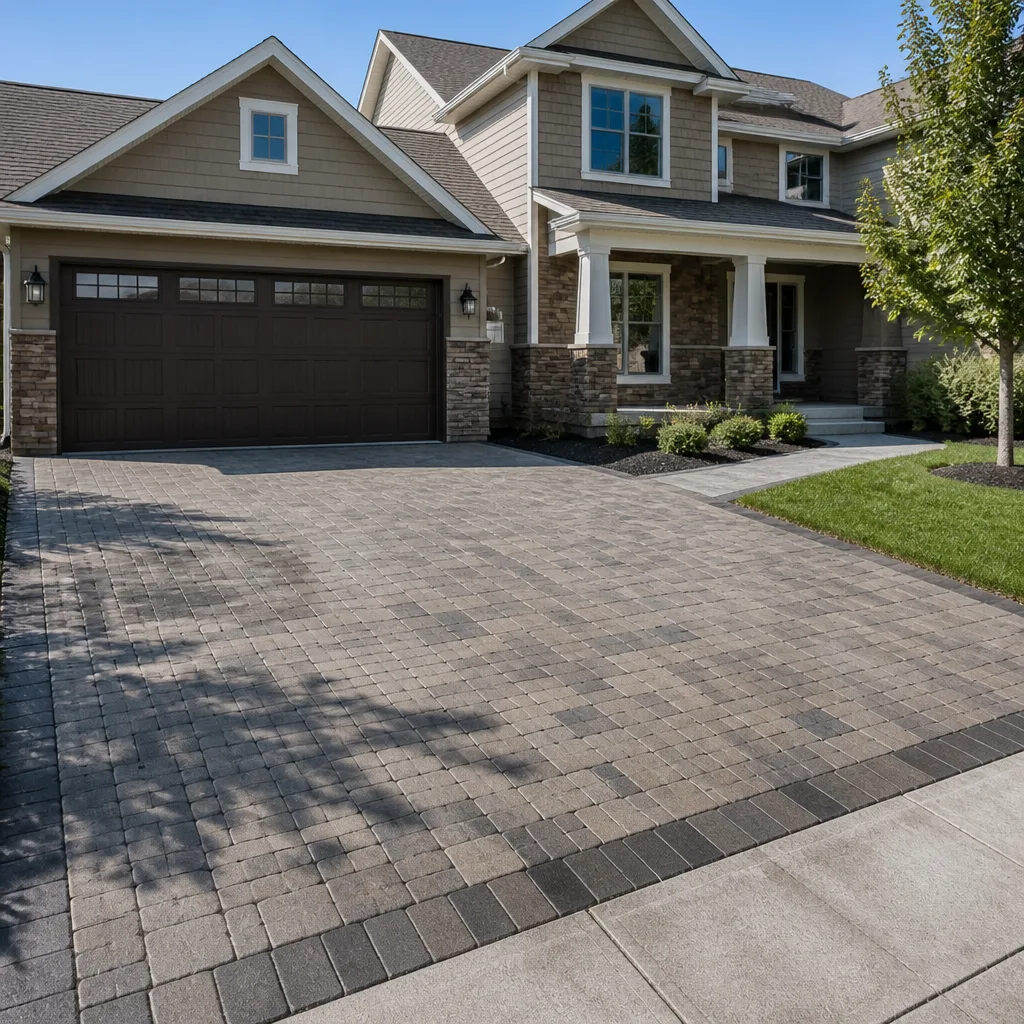

Table of Contents
- California’s Owner-Builder Rules: What You Can Legally Do Yourself
- The Resale Liability Trap: What ‘Contractor of Record’ Means for DIY Work
- Insurance Gaps: What Your Sacramento Homeowner’s Policy Won’t Cover
- Where DIY Actually Saves Real Money in Sacramento
- Where the Math Favors a Professional, Even Before the First Cut
- The Skill and Time Audit: Questions to Ask Before You Pull a Permit
- What a Written Professional Guarantee Covers That DIY Can’t Replicate
- Sacramento Permit Realities: Costs, Timelines, and Inspections
California’s Owner-Builder Rules: What You Can Legally Do Yourself
California is unusually generous to owner-builders compared to states like Nevada or Arizona. State law allows a homeowner to act as their own contractor on their primary residence, pulling permits, hiring subs, and doing the work themselves, provided they live in the home and aren’t planning to sell it immediately. There’s no general contractor license required for that. But the generosity comes with fine print.
First, you must sign an owner-builder declaration with the City of Sacramento when you pull the permit. That form acknowledges you understand you’re responsible for worker injuries, code compliance, and construction defects. Second, the work must comply with the California Residential Code, which Sacramento adopts with local amendments. Third, if you hire anyone to help, you’re legally required to carry workers’ compensation insurance, unless they’re a licensed contractor with their own coverage. A handyman without a license or workers’ comp who gets hurt on your property is a claim against your homeowner’s policy, or your savings if the policy denies it.
Here’s what a Sacramento homeowner can legally self-perform without a contractor’s license:
- Painting, trim, and finish work, interior and exterior
- Flooring installation (hardwood, LVP, tile, carpet)
- Cabinet installation and countertop replacement (non-structural)
- Fixture swaps: faucets, toilets, light fixtures, ceiling fans, where wiring and plumbing already exist
- Drywall repair and texturing
- Basic landscaping and hardscaping under 24 inches high (retaining walls above that trigger engineering)
- Minor framing repairs, such as replacing a few studs or a section of subfloor
What you cannot legally do without a licensed California contractor:
- Any electrical panel upgrade or new circuit run. Sacramento requires a licensed electrician for panel work, full stop.
- Any gas line work, including moving a stove or adding a line for a fire pit. Gas is the one trade where mistakes kill, not just fail inspection.
- Structural changes: removing or altering load-bearing walls, cutting new window or door openings in exterior walls, foundation work.
- HVAC installation or replacement of anything beyond a filter or thermostat.
- Work on a rental property or a property you intend to sell within one year. Owner-builder permits on a property sold within 12 months are a red flag to buyers and lenders.
In Sacramento specifically, the Building Department is thorough, not punitive. Inspectors will work with owner-builders. But they will also flag work that requires a licensed trade, and they won’t sign off on a final inspection if the wrong person did the work. The key with owner-builder work in Sacramento isn’t whether you can start it, it’s whether you can finish it to a standard that passes inspection and holds up at resale.
The Resale Liability Trap: What ‘Contractor of Record’ Means for DIY Work
When you sell a home in California, you fill out a Transfer Disclosure Statement. One of the questions asks whether you’re aware of any significant defects or malfunctions. Another set of questions, under the seller’s real property disclosure, asks about work done without permits. If you did DIY work with permits pulled as owner-builder, you disclose it. If you did DIY work without permits, you still have to disclose it, because failing to disclose is misrepresentation, and buyers have up to three years after discovering the issue to sue under California Civil Code section 2079. But the disclosure is not the liability; it’s what the disclosure triggers.
Under California’s Right to Repair Act (SB 800), builders and contractors are liable for construction defects for ten years, broken into tiers: one year for fit and finish, two years for systems, four years for doors and windows, ten years for structural defects. Here’s the kicker: an owner-builder who did their own work steps into the builder’s shoes. If a DIY bathroom remodel in your East Sacramento bungalow leaks behind a wall three years after you sell, and the buyer can demonstrate the leak traces to your workmanship, you’re the contractor of record. Your name is on the permit. You’re the one the buyer’s attorney sends the demand letter to.
This isn’t hypothetical. We’ve talked to Sacramento homeowners who sold houses with DIY work, then got calls from their real estate agent a year later because a buyer found unpermitted electrical in a remodeled garage or a shower pan that failed. The conversation always starts the same way: ‘Did you do this yourself?’ And the answer determines whether it’s a handshake fix or a lawsuit.
The practical takeaway: DIY work is fine while you live in the house and enjoy it. The liability accrues the day you list it. If you plan to stay ten-plus years, the risk is absorbed by your own enjoyment. If you might sell in five, the question isn’t whether you can do the work, it’s whether you want to carry the warranty for the next owner.
Insurance Gaps: What Your Sacramento Homeowner’s Policy Won’t Cover
Most Sacramento homeowners assume their insurance company will cover whatever happens in their house. That assumption ends at the first claim where the insurer asks one question: who did the work? If the answer is ‘I did,’ the claim often ends too.
Here’s how typical homeowners insurance policies in California treat DIY construction claims, based on standard HO-3 policy language and common carrier exclusions:
- Faulty workmanship is excluded, period. If you install a water heater yourself and it leaks, the water damage to your floors might be covered (slowly, conditionally), but the cost to fix the bad installation is not. If your bad electrical connection causes a fire, the insurer can deny the entire claim on the grounds that the loss originated from unpermitted, non-code-compliant work.
- Unpermitted work is a coverage killer. If a loss traces to work that was never permitted or inspected, many carriers deny the claim outright. You can’t claim accidental loss when the proximate cause was a deliberate decision to skip the inspection.
- Hidden water damage from DIY plumbing is frequently denied. The standard policy excludes damage that occurs over weeks or months, and a slow leak from a DIY soldered joint is the textbook example.
- Injuries to helpers aren’t covered. If a friend or hired handyman gets hurt on your DIY project and you don’t have workers’ comp, your medical payments coverage might apply, but your liability coverage likely won’t, because the injury arose from a business-like activity, not a household accident.
Compare that to licensed work. When a licensed contractor does a job in Sacramento, their general liability insurance covers the workmanship and any resulting damage. Their workers’ comp covers their crew. The permit and inspections create a paper trail that your insurer can’t easily argue against. The 365-Day Done Right Promise from Penhallow Remodeling adds a written guarantee layer that sits on top of the legal and insurance structure, not instead of it. For ongoing protection, see our Seasonal Construction Care for Sacramento: Year-Round Homeowner’s Guide. That’s the difference: with professional work, the liability chain runs from the contractor’s license to their insurance to their written warranty. With DIY, the chain runs to you, personally, for up to a decade after you sell.
Where DIY Actually Saves Real Money in Sacramento
None of this means you should never pick up a paintbrush. There’s a set of projects where DIY saves real money with minimal downside, and Sacramento’s climate and housing stock make some of them better candidates than others. The rule of thumb: DIY is worth it when the cost of failure is a redo, not a repair bill or a disclosure problem.
The math on DIY savings in the Sacramento market, based on current labor rates for licensed trade work in the region:
- Interior painting: Professional painters in Sacramento charge $3 – $6 per square foot for walls and trim. A 1,500-square-foot house runs $4,500 – $9,000. Materials for the same job run $800 – $1,500. DIY savings: $3,000 – $7,000. Risk: low. Worst case is uneven cut lines and a redo.
- LVP or laminate flooring: Installers charge $3 – $5 per square foot for floating floors. You can learn floating floor installation in an afternoon, and mistakes are recoverable. DIY savings on 1,000 square feet: $3,000 – $5,000.
- Cabinet hardware and fixture swaps: Swapping pulls, faucets, and light fixtures that don’t require new wiring is genuinely simple. You save $100 – $300 per fixture.
- Simple tiling (backsplash, not shower): A kitchen backsplash is forgiving, doesn’t need waterproofing beyond what’s behind the wall, and saves $1,000 – $2,000 in labor.
- Baseboards and casing: Miter cuts take practice, but caulk and paint hide a lot. Saves $500 – $1,500 on a whole house.
Sacramento’s flat, sprawling neighborhoods, Rancho Cordova, Citrus Heights, Arden-Arcade, Land Park, mean most homes are single-story ranches or modest two-story builds. Working on a six-foot ladder in a low attic is one thing. Working on a 30-foot ladder at a second-story roofline in the August heat is another. Keep the scope to what you can reach from a step stool, and you’ll stay in the money-saving zone.
Where the Math Favors a Professional, Even Before the First Cut
There’s a category of work where DIY pencil math misses the true cost. These are the projects where the permit, the inspection, the insurance, and the liability stack up so high that a professional’s price is the cheaper number, once you account for everything that happens after the work is done.
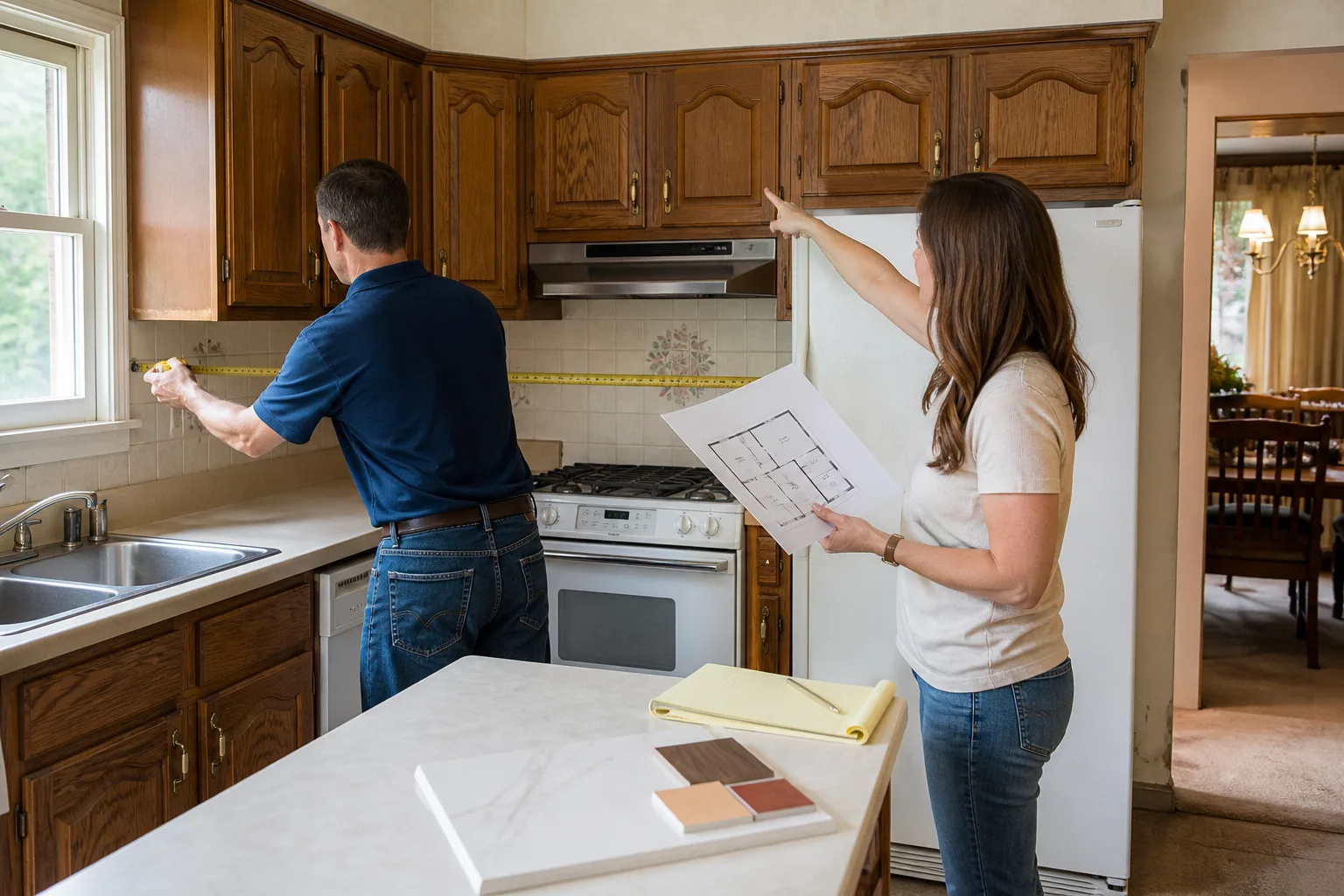
Kitchen remodeling in Sacramento is the clearest example. A full kitchen remodel in the Sacramento area typically runs $18,000 – $55,000 depending on layout, cabinet line, and countertop material. Half of that is materials; the other half is labor, design, and project management. A DIY kitchen might save $15,000 on paper. But here’s what that savings doesn’t buy: a cabinet installer who scribes KraftMaid or Wellborn cabinetry to uneven Sacramento walls without gaps; a countertop fabricator who templates for Cambria or Silestone quartz with seams that don’t telegraph; a licensed electrician for the new circuits the microwave drawer and induction range need; a plumber for the gas line move. The first time a DIY kitchen hits a hidden plumbing riser or an out-of-square corner, the clock starts, and kitchen downtime is measured in months, not weekends. A general contractor in Sacramento coordinates all of it, and a written project timeline means the kitchen comes back online on a schedule you can plan around.
Bathroom remodeling is even more deceptive. A bathroom is the one room where water, electricity, and structure meet in a 40-square-foot space. The shower pan, the cement board substrate (the moisture-resistant layer behind your tile), the waterproofing membrane, the vent fan ducting: one mistake in any of these, and the failure happens silently inside the wall for years. Sacramento’s dry summers and rainy winters don’t cause shower leaks, but they do reveal them, as soil movement from the region’s expansive clay causes small cracks that let water in. By the time you see the stain on the living room ceiling, the fix is no longer a $200 DIY repair; it’s a $4,000 – $8,000 remediation. A licensed contractor with a written guarantee doesn’t make the work magically perfect, but they make the failure their problem to fix, not yours to discover.
Then there’s exterior work. James Hardie siding, window and door replacement, and any project involving a ladder above the first story. Sacramento’s summer heat makes rooftop work dangerous for amateurs, and the fall wildfire season means any penetration in the building envelope has to be flashed correctly, or embers find their way in. This is not a savings opportunity. It’s a safety and insurance question, and the math never comes out in the weekend warrior’s favor.
The Skill and Time Audit: Questions to Ask Before You Pull a Permit
Before you fill out the owner-builder permit application with the City of Sacramento, or before you rip out the first cabinet, do this audit. Not after the tile is set. Before. The purpose is to measure your real capacity, not your ambition, because the gap between those two things is where the money goes.
Answer these seven questions honestly:
- Have you ever completed a comparable project that passed an inspection? If your answer is ‘I’ve watched videos’ or ‘my dad taught me,’ that’s a no. Building to code isn’t the same as building to functionality.
- Can you read a tape measure to 1/16 inch and cut with that accuracy, repeatedly, after hour six? Most amateur work doesn’t fail on the first cut. It fails on the fortieth, when fatigue sets in and the gaps start stacking.
- Do you understand the Sacramento building code requirements for this specific job? Not general knowledge. Specific: egress window sizes, stair rise and run, outlet spacing, shower valve pressure balancing. The City of Sacramento building department can give you the code sections, but reading them is on you.
- Can you schedule and pass the inspections? Sacramento inspections are scheduled on city timelines, not yours. If you can’t take a half-day off work for a rough-in inspection, the project stalls.
- Do you have the tools, or are you renting/buying $1,500 worth of equipment that a pro already owns? Tool cost is the hidden line item in every DIY budget.
- What’s your real timeline? A pro does a bathroom in two to three weeks. A homeowner working weekends and evenings typically takes four to six months. If that bathroom is the only one in the house, that’s six months of living with a construction site. The number on the invoice isn’t the only price; sometimes the price is a working shower in February.
- If this goes wrong, what’s the worst-case cost? For a paint job: you repaint. For a shower pan or an electrical panel: you’re paying a professional to tear out your work and redo it, at emergency rates, plus the cost of the original materials. Write that number down. Compare it to the professional quote. Make your decision based on the worst case, not the best case.
If you answer these and the picture is still murky, that’s useful information. Murky means risk you can’t see. And risk you can’t see is risk you can’t price.
What a Written Professional Guarantee Covers That DIY Can’t Replicate
When you do the work yourself, your guarantee is your own memory of how you built it. If something fails, the only person to call is yourself, and the only person paying for the fix is you. When a professional does the work, the guarantee is a document, and that document does things no amount of DIY diligence can replicate.
Here’s what a real written guarantee from a Sacramento contractor should include, and what each provision actually does:
- A defined warranty period with start and end dates. ‘One year from substantial completion’ should be written on paper with the date. Vague language is a non-guarantee.
- Specific coverage: what’s included and what’s excluded. A good warranty names the work, the materials, and the labor. A bad one says ‘workmanship included’ and leaves the exclusions to your imagination.
- The mechanics of a claim: how to report a problem, who comes out, and who pays. The 365-Day Done Right Promise from Penhallow Remodeling is written this way: if the work fails inside the guarantee period, we come back and fix it at no charge. No service call fee, no re-inspection fee, no negotiation.
- Layered coverage with manufacturer warranties. Professional work often pairs a contractor workmanship warranty with manufacturer warranties on the materials. We install Cambria quartz, which carries its own lifetime warranty alongside ours. When a countertop chipped or a finish failed, there are two parties answerable, not one.
- Transferability. Some contractor warranties transfer to the next owner. DIY work doesn’t come with a transferable anything. A transferable warranty is a resale asset; a DIY job is a resale liability.
How to evaluate whether a contractor’s written warranty is worth the paper it’s on:
- Read the warranty language before you sign the contract. If the contractor can’t produce a written warranty document, you don’t have a warranty.
- Check the claims process. If it requires you to pay a service fee to report a problem, the warranty is designed to be unused.
- Look at the contractor’s ongoing operation. A warranty from a company with a live phone line and a local presence means something. A warranty from a one-man operation who might be out of business in eighteen months is worth about as much as the paper it’s printed on.
- Ask what happens on the second failure. The first fix is the floor of a warranty. Penhallow’s standard is a free return visit if a repair fails, no service call, no re-inspection fee. That second-fix commitment is what separates a real warranty from a marketing line.
A DIY project has none of this because there’s no counterparty. The judge, jury, and defendant are all you. For small cosmetic work, that’s fine. For a kitchen remodel in Sacramento, where water lines, gas service, and electrical circuits converge, that’s a lot of personal exposure to carry for a decade.
Sacramento Permit Realities: Costs, Timelines, and Inspections
Sacramento’s permit process is faster than the Bay Area but slower than many homeowners expect. Understanding the timeline before you start helps you plan, whether you’re going DIY or hiring a pro.
- Permit costs: The City of Sacramento calculates permit fees based on project valuation. A bathroom remodel permit typically runs $500 – $1,200. A kitchen remodel with electrical and plumbing runs $800 – $2,000. Add plan review fees if the scope requires drawings, which structural work always does.
- Review timelines: Simple permits (water heater replacement, repiping, electrical panel swap) often issue within one to two weeks. Permits requiring plan review (additions, structural changes, second-story work) take three to six weeks for the first pass, longer if there are corrections.
- Inspections: Sacramento schedules inspections by phone or online, usually with a next-day or two-day window for most trades. The catch: inspectors arrive within a four-hour window, and someone, usually the permit holder, must be on site. Professional contractors absorb this by having a project manager or site supervisor on site for inspections. DIYers absorb it by taking time off work.
- Climate-specific considerations: Sacramento’s clay soil expands and contracts with moisture swings. Foundations in older neighborhoods like Midtown, Oak Park, and East Sacramento can shift seasonally. Any structural work, even minor foundation repair, benefits from a contractor who understands local soil behavior. The permit and inspection process enforces code minimums; it doesn’t account for decades of soil movement. That’s experience, and that’s what a local pro who works in Sacramento, not Roseville, not Elk Grove, but this specific soil, brings to the job.
The inspection process itself is straightforward, but it’s also the moment where DIY work meets an objective standard. An inspector’s job is to enforce the California Residential Code, not to coach you through it. If your rough plumbing doesn’t wet-vent properly or your wiring doesn’t meet current arc-fault circuit interrupter requirements, the inspector red-tags it and leaves. You fix it and reschedule, and another inspection window opens. Each iteration is time, and time is the one thing every remodel runs out of.
Common Mistakes to Avoid
- Pulling an owner-builder permit and then hiring an unlicensed handyman to do the work. You’ve signed on as the responsible party, but someone else is performing the work without a license or workers’ comp. If they get hurt, it’s your claim. If the work fails, it’s your permit and your liability.
- Skipping the permit because ‘it’s just a small job.’ In Sacramento, unpermitted work on plumbing, electrical, or structural changes gets discovered at resale, by the buyer’s home inspector. At that point, you’re negotiating a price reduction or a retrofit permit with time pressure, which is the most expensive way to get permitted.
- Assuming homeowner’s insurance covers DIY mistakes. It doesn’t. Faulty workmanship and unpermitted work are standard exclusions. Read your policy declarations and exclusions page before you open a wall.
- Underestimating the tool budget. A tile saw, a wet saw, a miter saw, a table saw, a compressor, a nailer: the tool list for a DIY bathroom reaches $1,500 – $2,500 quickly, and that money doesn’t stay in the house.
- Starting a kitchen or bathroom remodel without a written plan and a material list. The bathroom demo happens in a weekend. The rebuild takes months because you’re making material decisions one aisle at a time. A professional contractor orders materials before demo day; the DIYer discovers lead times after the sink is out.
- Not checking whether the work triggers Sacramento’s energy efficiency requirements. Some window and door replacements, and most HVAC work, trigger Title 24 energy compliance documentation. Missing that documentation fails the permit and stalls the project.
- Treating the inspection as optional. The city will not chase you for a missed inspection, but your insurer and the next buyer’s lawyer will. Final inspections are the proof that the work meets code. No final inspection, no proof.
See the difference
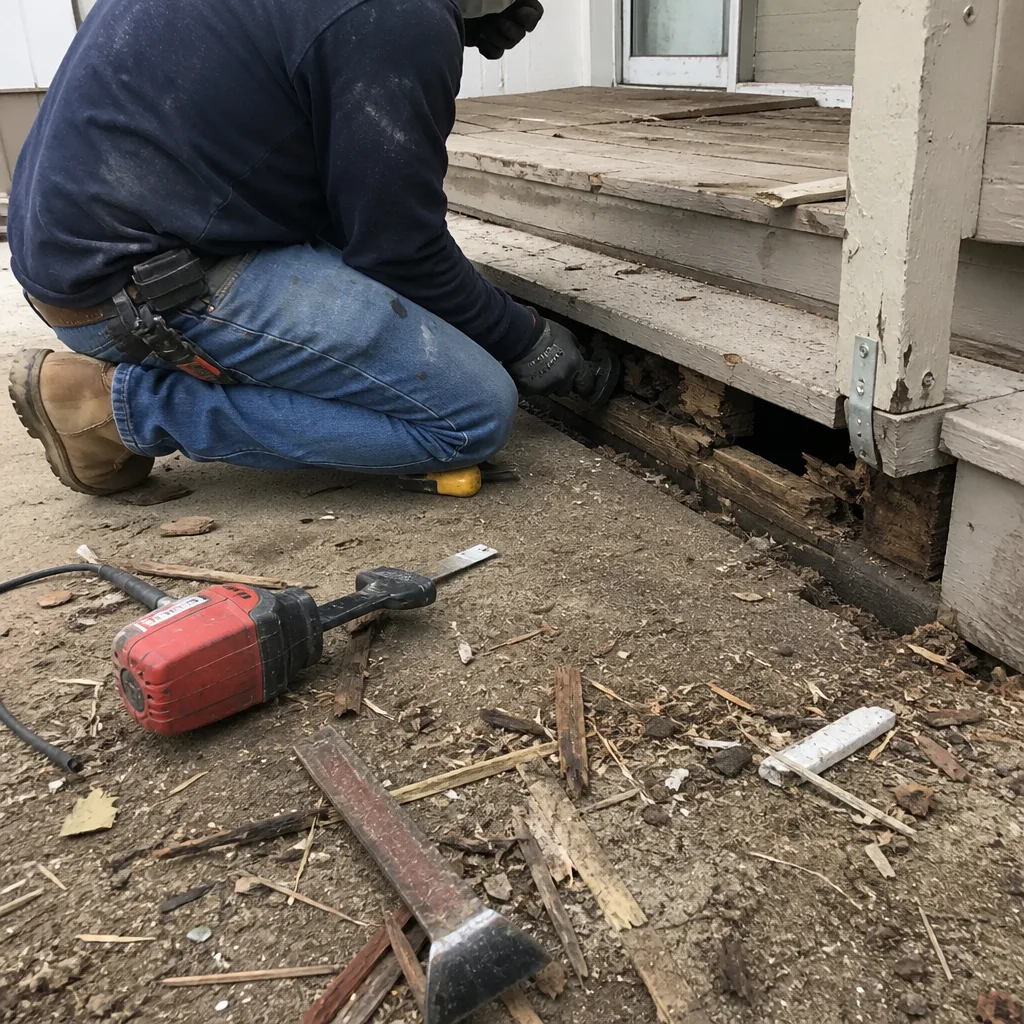 Before
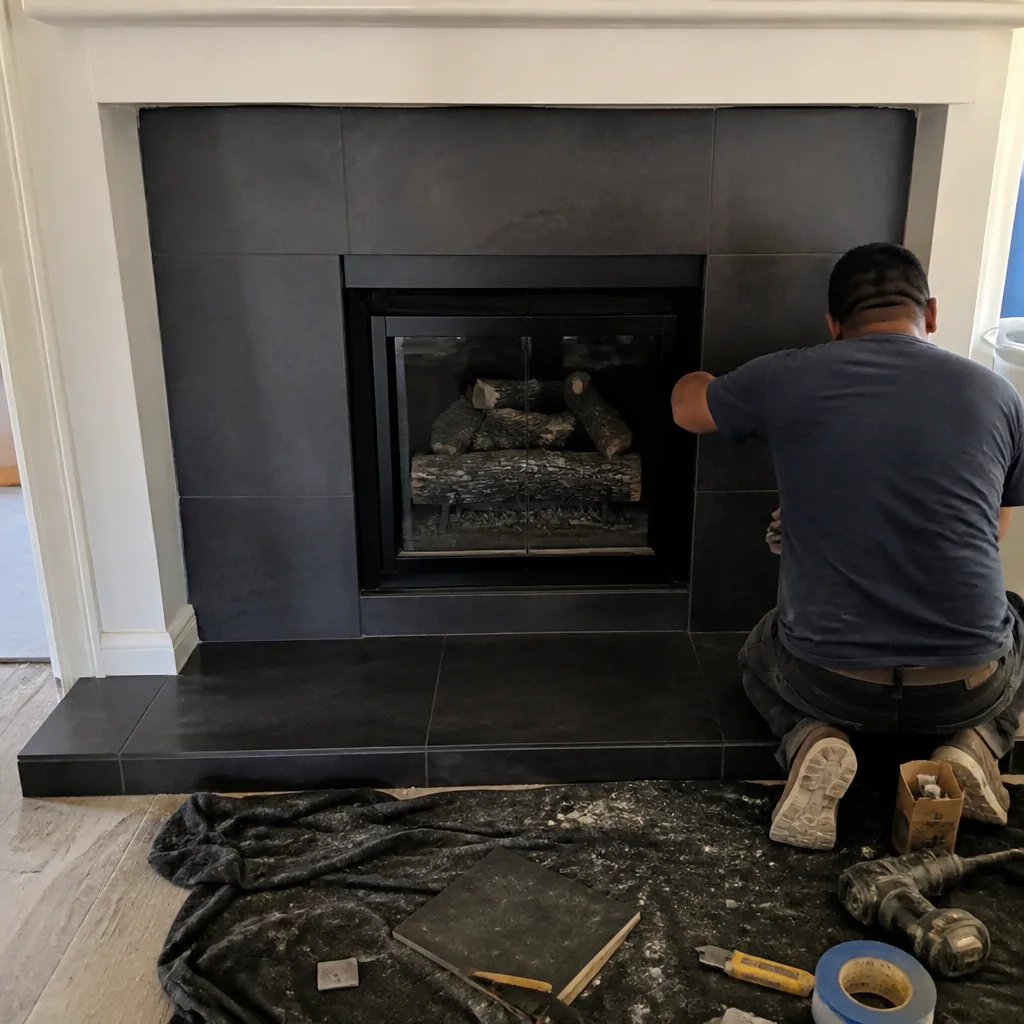 After
After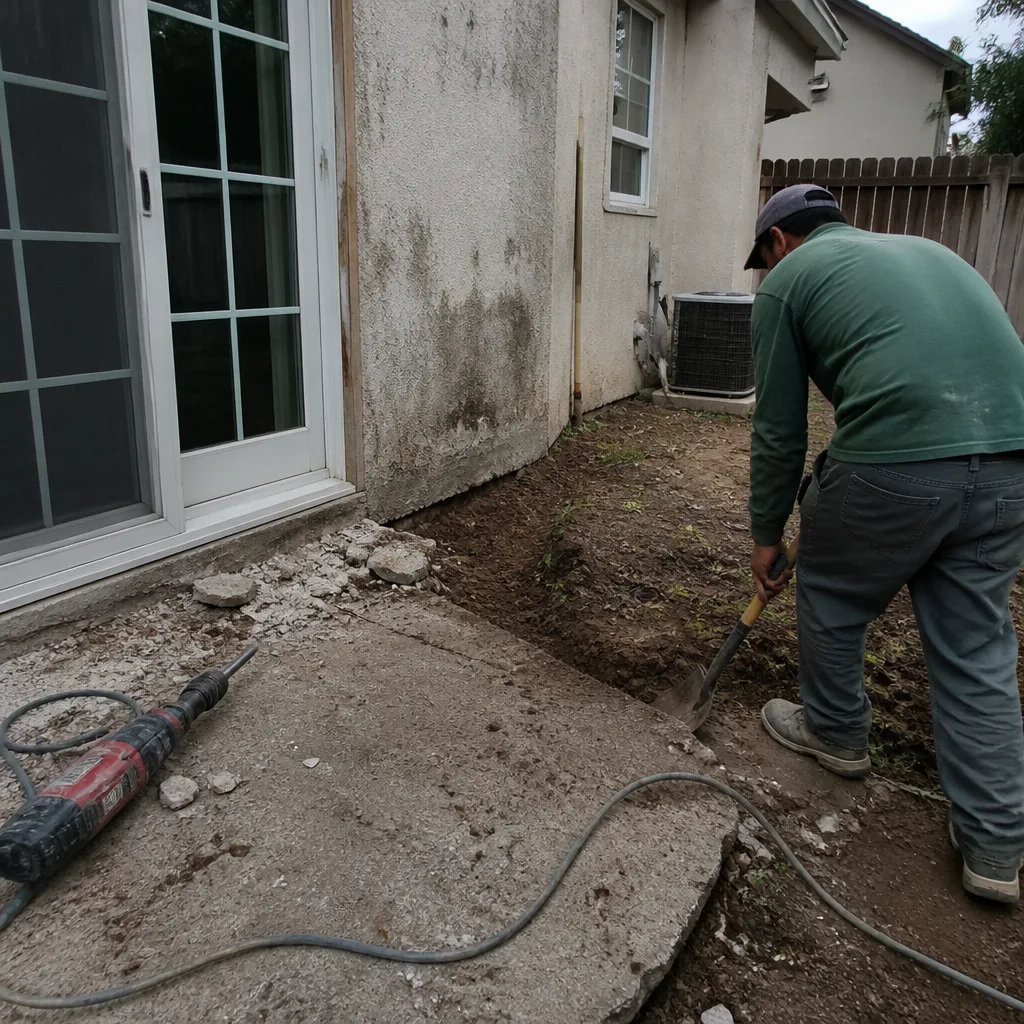 Before
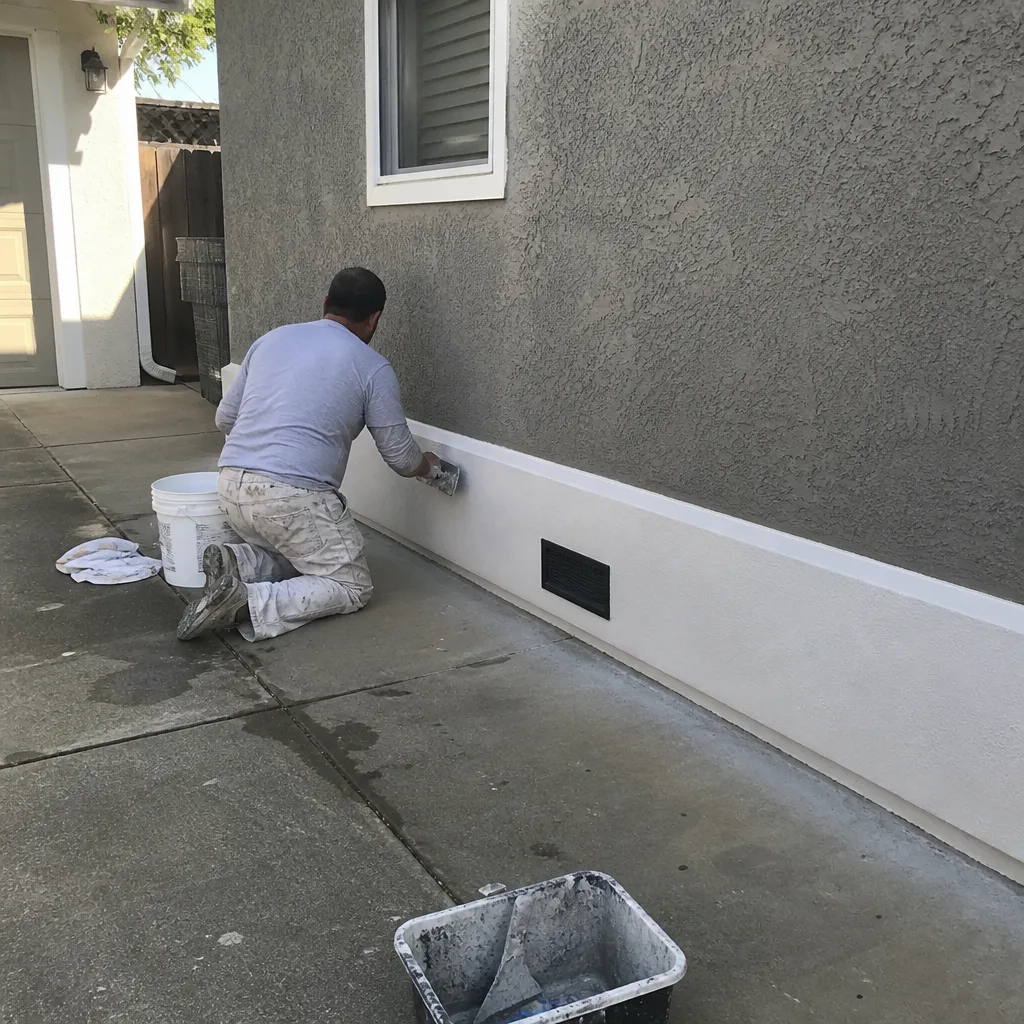 After
After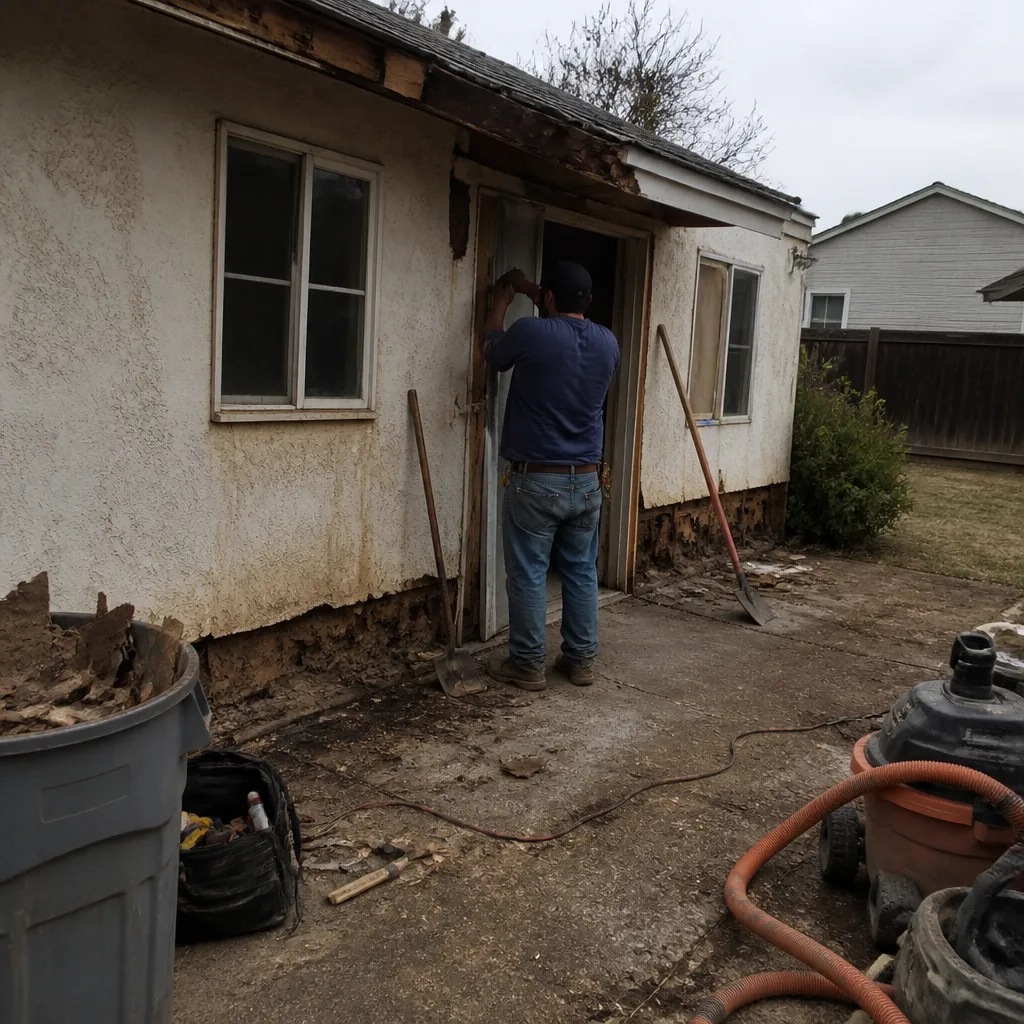 Before
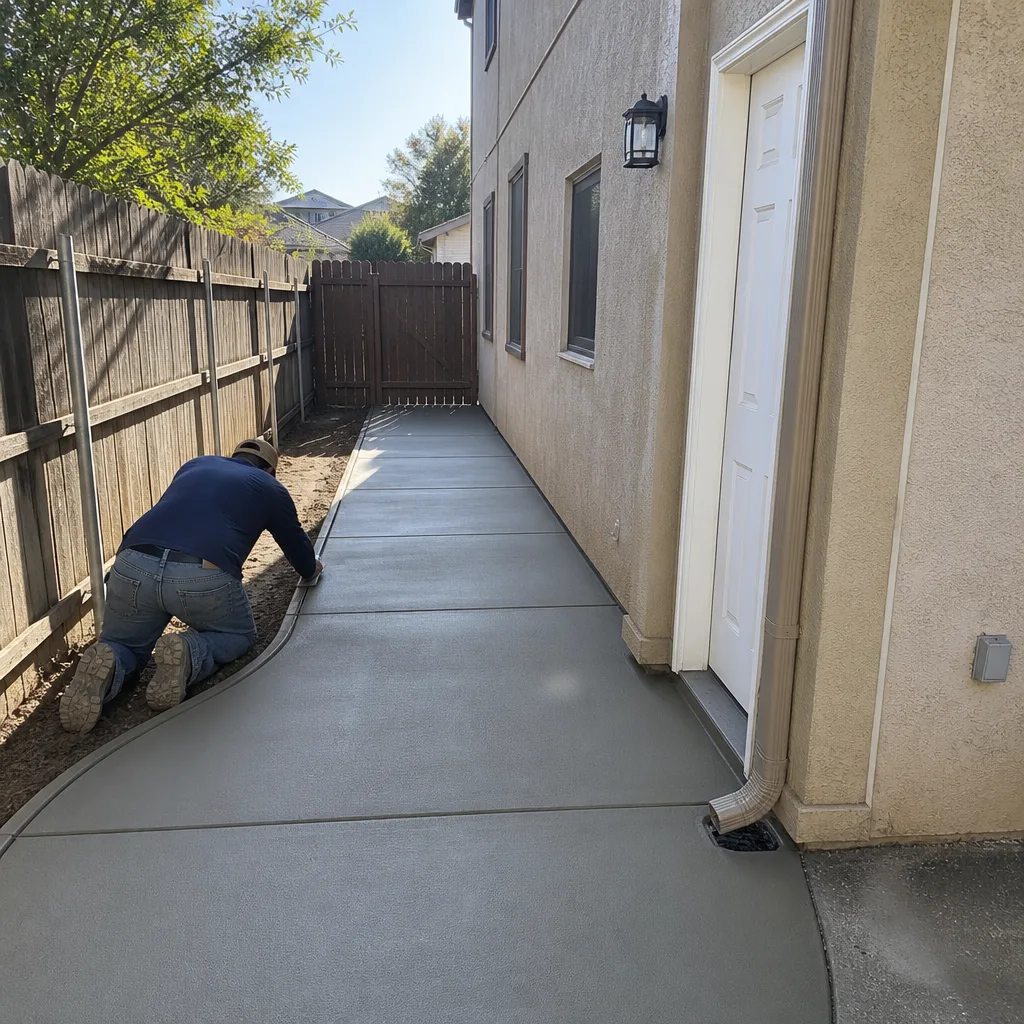 After
AfterWhen to Call a Professional
Call a professional when the work requires a permit you don’t want to carry, a trade you’re not licensed for, or a warranty you can’t write yourself. That means kitchens, bathrooms, structural changes, panel upgrades, gas lines, and anything touching the building envelope. It also means any project where the failure cost exceeds the savings, which is true of most work over about $5,000 in the Sacramento market. If you’re weighing a remodel and want a written price before you decide, Penhallow Remodeling Sacramento offers free estimates in Sacramento. Call (279) 300-1177, and we’ll walk the project with you and put the number in writing, along with what’s covered by the 365-Day Done Right Promise. You can also read more about our kitchen remodeling in Sacramento work or bathroom remodeling in Sacramento process before you decide which path makes sense for your house.
Frequently Asked Questions

Cosmetic work, painting, flooring, trim, and fixture swaps that don’t modify the underlying structure, plumbing, or electrical system, generally doesn’t require a permit in Sacramento. Anything involving structural changes, new electrical circuits, plumbing moves, gas lines, or HVAC work does. The City of Sacramento’s building department can confirm scope-specific requirements, and if you’re unsure, the permit is cheaper than the rework. For free clarity on a project you’re planning, call (279) 300-1177 and we’ll talk through what actually triggers a permit here.
You disclose it on the Transfer Disclosure Statement, and the buyer can use it to negotiate a price reduction or demand a retrofit permit. If you fail to disclose it, you’ve created a misrepresentation claim that survives the sale. For unpermitted work that causes a defect like a leak or an electrical fault, you’re the contractor of record and liable for up to ten years. The cleanest path is to disclose everything and price accordingly, or pull permits and close them out before listing.
A typical Sacramento bathroom remodel runs $12,000 – $30,000 with a licensed contractor, and labor accounts for roughly half. DIYing the entire project can save $6,000 – $15,000, but only if you know how to waterproof a shower pan, rough in plumbing, and wire GFCI circuits to code. If any of those fail, you’ll spend the savings on remediation, often more. For a full answer on what drives bathroom remodeling in Sacramento costs, contact us for a written estimate.
No. Standard HO-3 policies exclude faulty workmanship and damage arising from unpermitted work. If your DIY plumbing leak destroys flooring, the repair to the bad plumbing isn’t covered, and the water damage claim may be denied if the insurer traces the cause to work done without permits. Insurance covers sudden, accidental losses, not predictable failures from unlicensed work.
A licensed contractor typically completes a bathroom remodel in two to three weeks and a kitchen in six to ten weeks, depending on scope and material lead times. A homeowner working weekends and evenings typically takes four to six months for a bathroom and six to twelve months for a kitchen. The longer a project runs, the more it costs in material price changes, tool rentals, and life disruption. Written timelines and defined arrival windows are part of what a general contractor in Sacramento should commit to before work starts.
Look for a defined warranty period, specific inclusions and exclusions, a clear claims process with no fees, and a second-fix commitment if a repair fails. The workmanship warranty should sit on top of manufacturer warranties on materials. Penhallow Remodeling’s 365-Day Done Right Promise covers the work for a full year in writing, including a free return visit if a repair fails, with no service call or re-inspection fee.
The Bottom Line
The DIY versus professional decision in Sacramento isn’t a personality test. It’s a liability math problem. For cosmetic work under a few thousand dollars, DIY saves real money, and the downside is a redo. For kitchens, bathrooms, structural work, and anything with a permit, the true cost includes insurance exposure, resale disclosures, and ten years of personal liability as contractor of record. A licensed contractor’s written guarantee, insurance coverage, and permitting process transfer that liability off your shoulders, and in the Sacramento market, that transfer is worth more than the labor savings on any project that matters. Know which kind of job is in front of you before you swing the hammer.
Written by Trevor Nash, Owner at Penhallow Remodeling Sacramento, serving Sacramento since 2004.